info@compubooks.co.za

Pinco – A Structured Review of the Gambling Platform’s Economic Framework

Pinco – A Structured Review of the Gambling Platform’s Economic Framework
In the dynamic landscape of Azerbaijan’s digital entertainment sector, Pinco emerges as a platform requiring a measured, risk-aware evaluation. This analysis adopts an economic lens to scrutinize Pinco’s operational model, from its user interface to its financial mechanics. We will dissect its structure, weighing potential returns against inherent risks, without offering financial counsel but by providing a clear, diplomatic overview of its ecosystem. For direct access, users can navigate to https://marmaralandscaping.com/. The focus remains on sustainability and the long-term implications of engagement within such a digital environment.
Pinco’s Market Positioning and Core Value Proposition
From an economic standpoint, Pinco positions itself as a supplier in the leisure market, offering a suite of gambling and betting products. Its value proposition hinges on providing immediate access to entertainment and potential monetary gain. However, a critical analysis must consider the platform’s sustainability and the equilibrium it seeks between user retention and responsible provision. Pinco’s interface, often the first point of contact, is designed for capital efficiency-minimizing friction to encourage activity. This design philosophy carries both utility and risk, a duality that defines the entire platform experience.
Pinco Interface – A Cost-Benefit Analysis of User Experience
The user interface of Pinco functions as its primary distribution channel. A structured review reveals a layout engineered for high liquidity of user attention and capital. Navigation is typically streamlined, reducing transaction costs in terms of time for the user to place a bet or spin a reel. While this efficiency can be perceived as a positive user experience, it simultaneously lowers the barriers to rapid, repeated engagement. The economic design choice here is clear: optimize for activity volume. Users must consciously assess whether this design aligns with their personal risk management strategies for time and resource allocation.
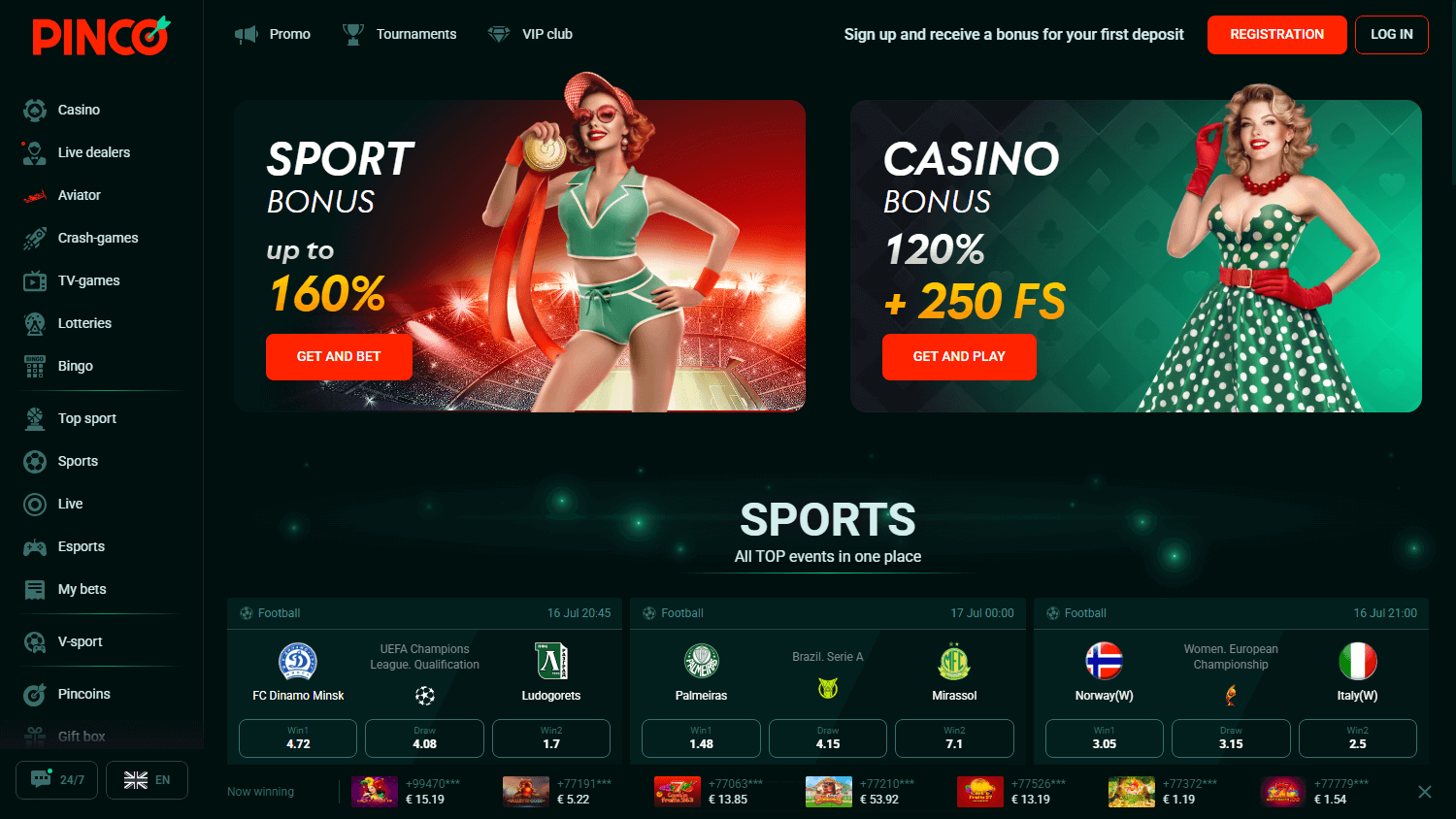
The Pinco Registration Protocol – Assessing Entry Barriers and KYC Compliance
The registration process at Pinco represents the initial capital allocation decision for a user-the investment of personal data. Economically, this is a transaction where the user provides information in exchange for platform access. Pinco’s procedure typically involves standard fields: mobile number, email, and currency selection, with the Azerbaijani manat (AZN) being central. The critical component is the Know Your Customer (KYC) verification, a non-negotiable risk-mitigation tool for the platform. This process, while sometimes perceived as a friction cost, is a fundamental safeguard. It represents Pinco’s compliance with anti-fraud and anti-money laundering frameworks, directly impacting the platform’s systemic risk and long-term operational viability. A delayed verification can be seen as a short-term liquidity constraint for the user but serves a long-term stability function.
- Initial data input requires an email address and a valid Azerbaijani mobile number.
- Selection of the national currency, the Azerbaijani manat (AZN), is mandatory for all financial transactions.
- Account creation involves setting a secure password, a basic but crucial personal security investment.
- The KYC procedure necessitates submitting a government-issued ID for identity confirmation.
- Proof of address may be required, linking digital activity to a physical jurisdiction.
- Verification timelines can vary, introducing a time-cost variable for the user.
- The process is designed as a one-time sunk cost, with the aim of enabling future transactional fluidity.
- Failure to complete KYC results in a frozen account state, a complete halt to economic activity on the platform.
Financial Infrastructure – Deposits and Withdrawals on Pinco
The financial pipeline of any gambling platform is its circulatory system. For Pinco, this system is defined by its deposit and withdrawal mechanisms, denominated in AZN. A risk-aware analysis separates the inflow from the outflow, as their economic incentives differ markedly. Deposit methods are optimized for velocity, offering multiple low-friction channels to convert manat into platform credit. Withdrawals, representing the platform’s liability, involve more stringent controls and longer settlement periods. This asymmetry is a standard industry practice but must be clearly understood by the user as part of the platform’s cash flow management strategy.
| Transaction Type | Common Methods in Azerbaijan | Typical Processing Time | Economic Implication |
|---|---|---|---|
| Deposit | Bank Card (Visa/Mastercard), Local E-wallets, Mobile Operators | Instant to a few minutes | High liquidity injection; minimal opportunity cost for the user. |
| Deposit | Bank Transfer | Several hours to one business day | Lower velocity, higher transaction cost in time. |
| Withdrawal | Back to Bank Card | 1 to 5 business days | Creates a delayed liability for the platform; imposes a waiting cost on the user. |
| Withdrawal | To E-wallet | Up to 24 hours | Faster settlement, reflecting differing partnerships and risk assessments. |
| Withdrawal | Internal Audit Hold | Varies (additional 12-48 hours) | A mandatory risk-management overhead, non-negotiable. |
Pinco Bonus Economics – Evaluating Promotional Capital
Bonuses and promotions are Pinco’s marketing capital expenditure, deployed to acquire and retain users. An economic lens views these not as “free money” but as leveraged instruments with attached liabilities. A welcome bonus, for instance, is a conditional subsidy. The user receives extra playing capital, but the platform imposes wagering requirements-a clear debt-like obligation that must be “repaid” through volume of play. The long-term financial impact of accepting such bonuses must be calculated against these requirements. They are designed to increase user engagement (and thereby expected loss) over a specific period. A diplomatic but clear assessment recognizes their utility in enhancing initial experience while underscoring their function as a key risk multiplier if not managed with strict personal discipline.
- Welcome packages often match a percentage of the first deposit, increasing initial operational capital.
- Free spins are a non-cash incentive with constrained utility, usually limited to specific slot titles.
- Wagering requirements (x35, x40, etc.) define the multiplier on the bonus amount that must be bet before withdrawal.
- Game weighting dictates that not all games contribute equally to meeting these requirements, affecting strategy.
- Time limits on bonus utilization create a temporal constraint, pressuring faster decision-making.
- Reload bonuses for existing users function as retention subsidies, aiming to prevent capital outflow.
- Cashback offers act as a partial insurance mechanism against short-term losses, smoothing the user’s loss curve.
- VIP or loyalty programs are long-term incentive structures, rewarding volume with progressively better exchange rates (e.g., lower wagering).
The Pinco Application – Mobile Platform Efficiency and Risk Portability
The Pinco mobile app represents a technological capital investment to capture the mobile-centric market. Its economic function is to reduce spatial and temporal transaction costs, making the platform’s services available at near-zero marginal access cost from anywhere. This portability is a double-edged sword. While it offers convenience, it also significantly increases the risk of impulsive engagement, as the barrier to entry is reduced to a device tap. The app’s performance, update frequency, and data consumption are operational metrics that impact user cost (in time and mobile data). A structured review must acknowledge the efficiency gains while explicitly noting the amplified behavioral risk that such seamless access entails.

Security and Regulatory Capital of the Pinco Platform
In economic terms, a platform’s security and regulatory standing constitute its defensive capital. For Pinco, this encompasses data encryption protocols, fair play certifications for its games, and adherence to the licensing requirements of its jurisdiction. This capital does not generate direct revenue but is essential for maintaining trust-a non-tangible but critical asset. A breach in security represents a catastrophic liability, eroding user trust capital instantly. Therefore, Pinco’s investment in SSL encryption, regular audits, and clear privacy policies is a rational allocation of resources to insure against existential risk. Users should evaluate this defensive capital as a measure of the platform’s long-term commitment to operational sustainability.
Pinco Support System – The Cost of Service and Conflict Resolution
Customer support is Pinco’s service and maintenance department, a cost center dedicated to resolving user-side frictions. Its efficiency directly impacts user retention costs. Multiple channels (live chat, email, telephone) represent different levels of investment in service liquidity. Live chat offers immediate, high-liquidity support for urgent issues, while email serves as a lower-cost, asynchronous channel. The responsiveness and competence of this department are key indicators of the platform’s operational health. From a risk perspective, robust support mitigates the potential losses from technical errors or misunderstandings, functioning as an internal dispute resolution mechanism that prevents the externalization of conflicts.
- Live chat support provides the highest velocity for issue resolution, typically available during peak hours.
- Email ticketing systems create an audit trail for complex issues, though with a longer resolution timeframe.
- Telephone support, if offered, adds a layer of personal verification for sensitive account matters.
- FAQ and help sections are a form of self-service capital, reducing the platform’s variable support costs.
- The tone and professionalism of support agents reflect the platform’s investment in human capital training.
- Resolution effectiveness is the ultimate metric, measuring the system’s ability to restore normal economic activity.
A Holistic Risk-Benefit Synthesis of the Pinco Ecosystem
Constructing a final, diplomatic synthesis of Pinco requires balancing its engineered efficiencies against its inherent financial and behavioral risks. The platform is a sophisticated digital environment that minimizes transactional friction for deposits, gameplay, and navigation through a generally competent interface and mobile application. Its use of promotional capital (bonuses) is a standard market practice designed to stimulate activity. However, the economic reality is that its long-term sustainability for the individual user is not guaranteed and is, in fact, statistically negative when viewed through the lens of expected value. The defensive capital invested in security, KYC, and regulation is a positive indicator of institutional seriousness. The ultimate assessment rests on the user’s individual capacity for strict personal fiscal discipline, treating any capital allocated to the platform as high-risk leisure expenditure with a high probability of total loss. In this context, Pinco operates as a typical market participant, offering a service whose utility must be personally measured against its significant and non-diversifiable risks.